Wednesday, July 22, 2009

pants, bum


I had chosen words for The Lyrics Game two months in advance, but the images weren't in them all. So I was in the U.K. when I searched google image for "bum," and turns out I got no photos of scraggly old homeless guys, but many female rumps. That made me more aware of words we use all the time in the U.S. that I don't even notice.

Then this ad from the Duluth Trading Company came, and I saw it in its way-too-American light. "Pants" and "bum" both in one place, with a free pocketknife.

Friday, June 12, 2009

Variations on English

English in different parts of the world... Links and comments are welcome! Because I'm going to England in a month and a few days, I'm reviewing how I could get myself in trouble or seem rude and tacky. This is one of my favorite sites about that:


The Septic's Companion:
A British Slang Dictionary—A dictionary of British slang, written by a Scotsman living in America

It's been linked on my English Oddities page for a long time, and I was one of the contributors before it was a book, so cool! It's more fun that some of the other dictionaries I've seen, though I just love dictionaries and I love stories of words.

Hema Bharadwaj wrote recently that her son, Raghu, is having a hard time in India because the English is so different from what he learned in the U.S. My favorite part of watching "Slumdog Millionaire" was hearing the game show host's English.

I had lunch with my friend Charles Thursday. He's English, and told of a road trip to the Midwest last year or so, and of being in a restaurant with three friends of ours who grew up in New Mexico (one in Texas and New Mexico) who all ordered water and that was fine, but when he tried to order water, the waitress couldn't understand what he wanted at all, no matter how much he repeated it. That's because the main sound in the word "water" in that part of the U.S. is a heavy "r" and Charles has no "r" at all. Plus he pronounced the "t" in the middle of "water" as though it were, well... a "t."

Once I sang in a folk club in England. Maybe at St. Neot's, in a pub. Maybe in a different folk club meeting in a different pub. It was the late 1970's. I sang The Titanic, and showed them the singalong parts, and when they got to their part I laughed because I was used to "...to the bottom of the the sea" sounding like a southwestern U.S. "boddum" and got that very hard "t" from a group of Brits!

Wednesday, June 10, 2009

Getting jokes


Fractalpus

That's from Neopets.
It's not important.
If one gets the joke, it's like "passing a test," but if one doesn't get the joke life can still continue, the sun will shine, people will play and eat...

It did remind me of "...To Get More Jokes," though and I should link that with it. Here's a quote about an epiphany-esque moment when I was teaching:

I would be asked "Why do we have to learn this?" Sometimes I gave a serious answer, and sometimes a philosophical answer. Sometimes I made light of it. Sometimes the honest answer was "You don't have to learn this, but I have to try to teach it so I can get paid." Or "Only some of you will need to know it, but they don't know which ones yet, so I have to say it to everybody."

Then one day, the question came phrased a new and better way: "What is this GOOD for?" The answer I gave then changed my life and thinking. I said quickly "So you can get more jokes." I think we were reading a simplified Romeo and Juliet at the time. I could've gone into literature and history and fine arts, but the truth is that the best and most immediate use of most random learning is that it illuminates the world. The more we know, the more jokes we will get.

http://sandradodd.com/connections/jokes

Sunday, May 24, 2009

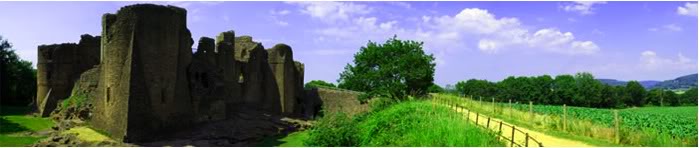
Google maps views of medieval castles


Google Maps of Castles, Cathedrals and Abbeys


Imagine all the people in the past who would have been thrilled with this technology. It's pretty thrilling now, but think back to all the scholars, geographers, historians, kings and generals whose lives would have been different had such images existed in past centuries.


2024 NOTE:

Those links quit working; I'm sad.

The wayback machine has some, but searching google maps or google earth for a castle might be better, all these years later.

Saturday, May 23, 2009

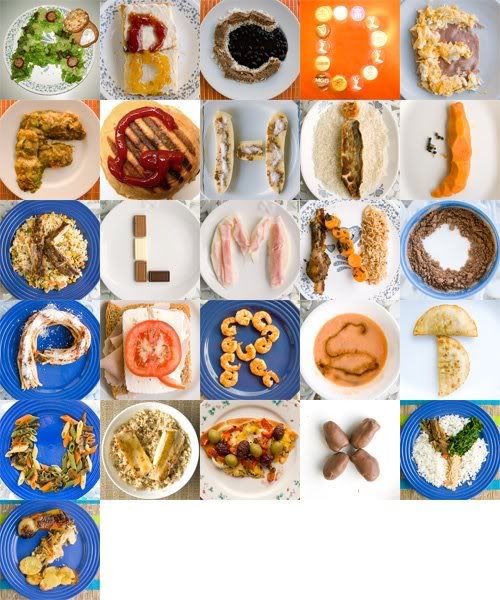
Alphabetical Food

Apple, Banana, Cookies, Dumplings, Eggs, Fish, Goat cheese, Hummus, Ice cream, Jelly, Ketchup..... but not like that, like this!


I got it here: Crooked Brains, and they got it here: Gugazine (or maybe here: Doise Dois). It's by Luiza Prado, an artist in Brazil, and is called "Eatphabet."


On her page you can see closeups of the various letters, too!

It certainly does remind me of Monkey Platters, which reminds me that this fall (maybe in November, date to be announced when I know it) there will be a three day happening for unschoolers with young children in Albuquerque (local/regional, not "big conference" at all) called The Monkeyplatter Festival.

And that reminds me of the January symposium in Santa Fe called SUSS.

Saturday, May 16, 2009

Websites that are like Museums


More at lileks.com


I love these public collections! Please leave links to your favorites in the comments, and if you want to make them "clickable," the code is here: http://sandradodd.com/hotlink

Friday, May 8, 2009

Corn Bags and Kirschsteinkissen

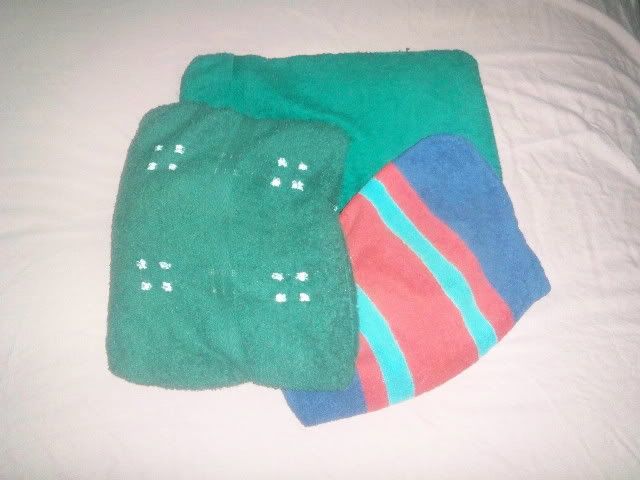
About fifteen years ago, our friend Bela gave us two lumpy flannel pillows. Turns out they were "corn bags." They were like big bean bags filled with seed corn (whole corn), intended for heating in the microwave and using as hand warmers or footwarmers, sitting around on a winter's evening, or putting in the bed to warm it up. When those wore out, I made more, using terrycloth from towels. They're wonderful.

These are about 10" a side, and are based on the size of the piece of terrycloth, and not being too big to hold or to put in the microwave easily. If you want to make one, buy seed corn and put in enough for it to be a solid layer of corn when the bag's on its side, and to fill the bag half or less when it's held by the corner.


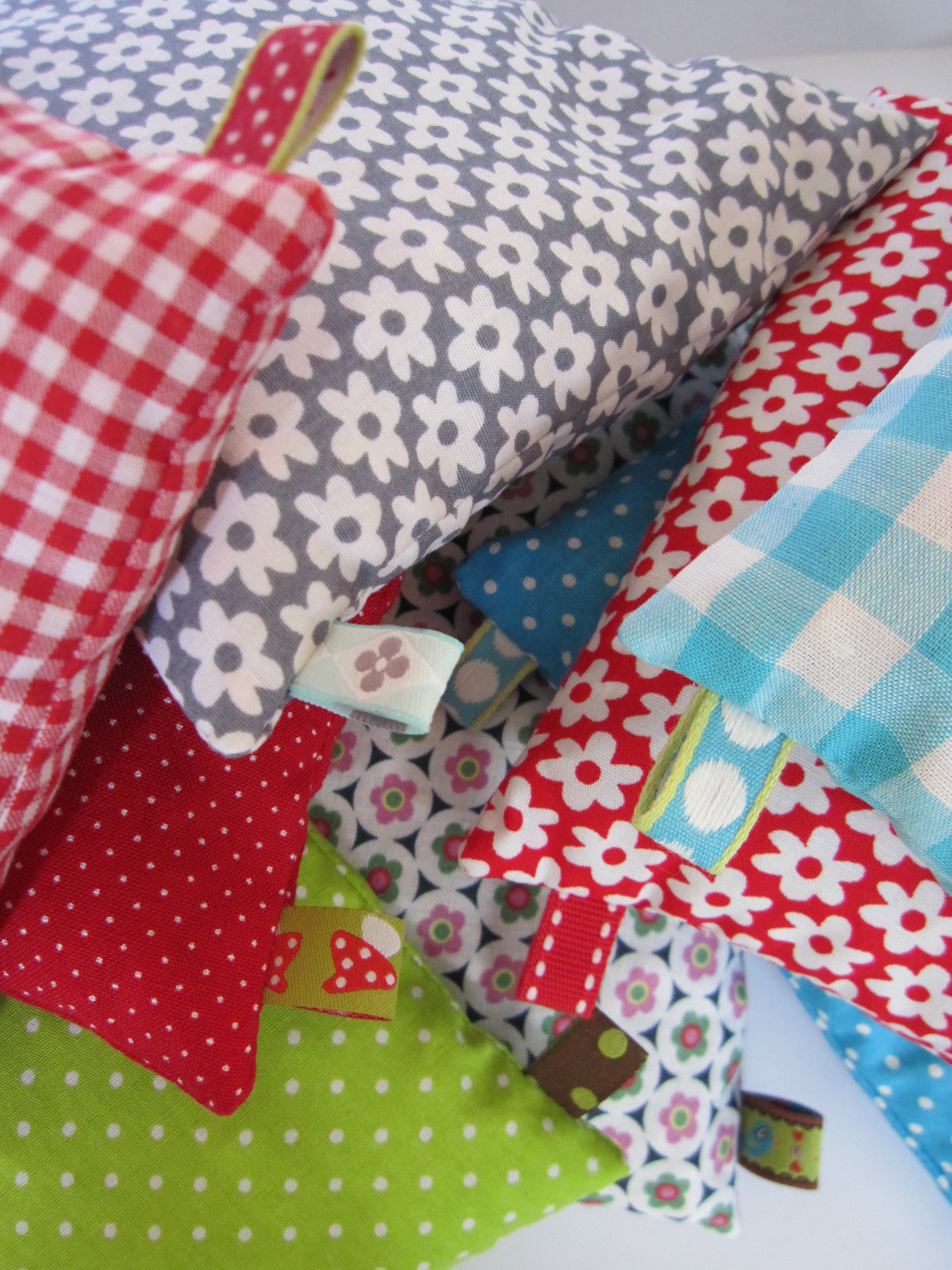
This morning, Keith sent me a link to a blog entry on medieval bed-warming techniques, and one of the things was a bag of cherry pits heated in a low oven. Bed warmers puzzle & answers

That led me to an image search, because it said the cherry-pit bags are becoming popular again:


Once when we were in Minneapolis (Keith was working on a contract, and living in an apartment) Holly was cold, and we hadn't brought a corn bag. I put rice into one of Keith's white cotton socks and put an overhand knot in the top. That worked, and so Keith kept it for future visits. We still have it, somewhere. Corn stays warm longer, though, and when the corn is new there's humidity with it too. I suppose cherry pits were good because the heat would last a while and heat up without destroying the seed (in those pre-microwave days of yore).

The blog is worth saving and exploring.
Old & Interesting, history of domestic paraphernalia, household antiques in use.
Antique household equipment, furnishings, utensils - housekeeping as part of social history. Domestic life, household management - how people organised their homes and did the daily chores. Yesterday's everyday objects are today's antiques or museum pieces, and we may view them with nostalgia or curiosity about past ways of life. Old & Interesting takes a look at how these everyday things were actually used, how people managed their home life - and more. Alongside articles illustrated by excerpts from advice manuals, period novels and other literature, this page is updated every couple of weeks. RSS feed or email will let you know about new articles.